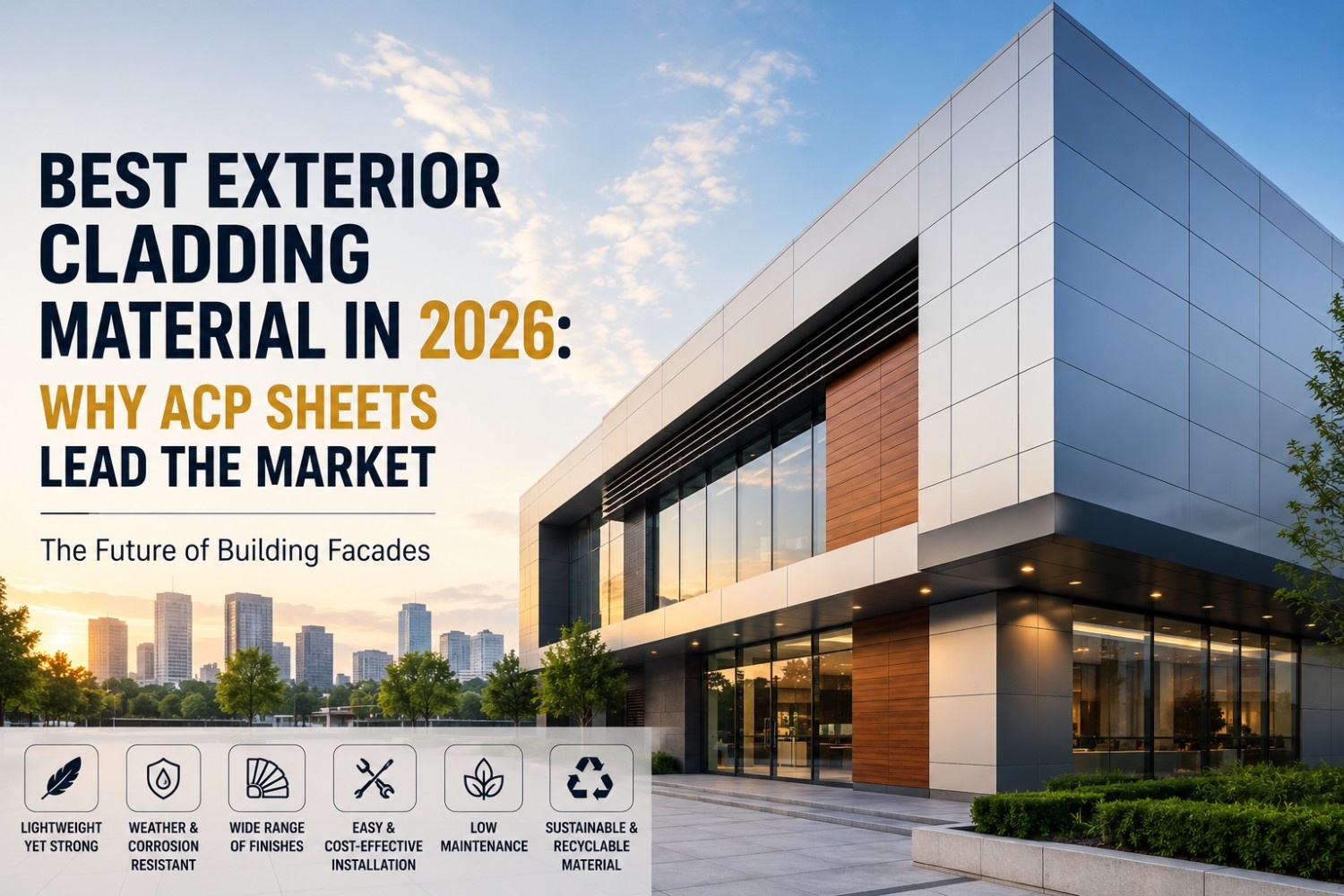
Modern architecture in 2026 is defined by more than striking skylines and bold building forms. The exterior of a building has become a critical element that influences energy efficiency, durability, maintenance costs, and visual appeal. As cities around the world continue to embrace sustainable urban development, architects and developers are increasingly prioritizing high-performance facade solutions that balance aesthetics with practicality.
Among the many options available today, ACP sheets have emerged as one of the most preferred exterior cladding materials. Their ability to combine lightweight construction, design flexibility, and long-term performance has positioned them at the forefront of facade cladding 2026 trends. Whether for commercial landmarks, residential projects, or public infrastructure, aluminium composite panels continue to shape the future of building exteriors.
What Is an ACP Sheet?
ACP sheets, also known as Aluminium Composite Panels, are engineered cladding materials made by bonding two thin aluminium layers to a central core. Depending on project requirements, this core may be composed of polyethylene (PE) or fire-retardant (FR) material. The result is a strong yet lightweight panel that offers excellent durability and design versatility.
Originally developed to provide a practical alternative to heavier facade materials, aluminium composite panels have evolved significantly over the years. Today’s ACP sheets are available in a wide range of thicknesses, finishes, and performance specifications, making them suitable for everything from retail storefronts to high-rise towers.
One of the reasons ACP remains popular is its ability to deliver a premium appearance without the structural challenges associated with traditional exterior cladding materials. This combination of performance and aesthetics has made ACP an essential component of contemporary architecture.
Why ACP Sheets Dominate in 2026
Lightweight Yet Structurally Strong
One of the greatest advantages of ACP sheets is their exceptional strength-to-weight ratio. Compared with natural stone or concrete cladding, aluminium composite panels are significantly lighter while maintaining excellent rigidity. This reduces structural load on buildings and simplifies installation, particularly in large-scale projects and high-rise developments.
Superior Weather Resistance
Building exteriors are exposed to constant environmental stress. ACP sheets are designed to withstand rain, wind, humidity, temperature fluctuations, and prolonged UV exposure. High-quality coatings help prevent fading, corrosion, and surface degradation, ensuring the facade maintains its appearance for years.
This resilience makes ACP a preferred exterior cladding material in diverse climates ranging from tropical regions to urban environments with significant pollution exposure.
Extensive Design Flexibility
Architects increasingly demand materials that support creative freedom. ACP sheets meet this requirement through an impressive variety of finishes and textures. Popular options include metallic finishes, wood-inspired designs, natural stone effects, brushed metal appearances, and contemporary matte surfaces.
These aesthetic possibilities allow designers to achieve premium architectural looks while maintaining consistency across large facade areas. Products such as Alstone Classic, Alstone Evolution, and Alstone Anometa demonstrate how modern ACP collections can replicate sophisticated natural materials while offering the practical benefits of engineered panels.
Cost-Effective Installation
The lightweight nature of ACP sheets contributes directly to faster installation times and lower labor costs. Panels can be fabricated, cut, routed, and shaped with relative ease, allowing construction teams to complete projects more efficiently.
Compared with heavier facade systems that require specialized structural support and longer installation schedules, ACP offers a practical solution that helps control project budgets without compromising design quality.
Minimal Maintenance Requirements
Maintenance is a major consideration in facade selection. ACP sheets require relatively little upkeep compared with materials that may crack, stain, or weather unevenly. Routine cleaning is typically sufficient to preserve their appearance, reducing long-term operational expenses for property owners.
Sustainability and Recyclability
Sustainability remains a driving force in architecture and urban planning. Aluminium is highly recyclable, making ACP sheets a more environmentally responsible choice than many traditional cladding alternatives. Manufacturers continue to invest in greener production methods and improved material efficiency, further strengthening ACP’s position within sustainable building design.
ACP vs. Other Cladding Materials
When evaluating facade cladding 2026 options, it is important to compare ACP with other commonly used materials.
| Material | Weight | Cost | Design Variety | Maintenance |
|---|---|---|---|---|
| ACP Sheets | Lightweight | Moderate | Extensive | Low |
| Natural Stone | Heavy | High | Limited | Moderate |
| Brick Cladding | Heavy | Moderate to High | Limited | Moderate |
| HPL Panels | Medium | Moderate | Good | Moderate |
| Zinc Cladding | Medium | High | Moderate | Low |
Natural stone offers timeless appeal but adds significant structural weight and installation costs. Brick remains durable but limits design flexibility. HPL panels provide attractive finishes but may not offer the same level of formability as aluminium composite panels. Zinc cladding delivers a premium appearance but often comes with a substantially higher investment.
ACP sheets stand out by delivering an effective balance of affordability, performance, visual variety, and ease of installation.
Key Applications in Modern Architecture
The versatility of ACP sheets has led to widespread adoption across multiple sectors of the built environment.
Commercial buildings frequently utilize ACP for large-scale facades because it allows architects to create clean, contemporary designs while maintaining project efficiency. Retail shopfronts benefit from the material’s visual appeal and branding flexibility.
High-rise towers increasingly incorporate aluminium composite panels due to their lightweight characteristics and resistance to environmental conditions. Public infrastructure projects such as metro stations, airports, hospitals, and transportation hubs also rely on ACP for durable and visually appealing exterior surfaces.
Residential architecture has become another significant growth area. Homeowners and developers are using ACP sheets to create modern elevations that combine elegance with low maintenance requirements.
Across global cities undergoing urban renewal and modernization, ACP continues to play a central role in shaping dynamic and future-ready architectural landscapes.
What to Look for When Choosing ACP Sheets
Selecting the right ACP product requires careful consideration of performance specifications and project requirements.
Fire safety should be a top priority. For commercial and high-rise projects, FR or A2-rated cores are generally preferred because they provide enhanced fire resistance. Coating selection is equally important. PVDF coatings are often recommended for exterior applications due to their superior weather and UV resistance, while PE coatings are commonly used in less demanding environments.
Panel thickness should align with the intended application. Common options include 3mm, 4mm, and 6mm ACP sheets, each offering different levels of rigidity and performance.
Buyers should also evaluate warranty coverage, manufacturing standards, and supplier reputation. Established manufacturers such as Alstone India have built credibility through decades of experience, extensive product portfolios, and proven performance across large-scale facade projects worldwide.
Conclusion
As architecture continues to evolve, ACP sheets have established themselves as one of the most effective exterior cladding materials available in 2026. Their combination of lightweight strength, weather resistance, design versatility, sustainability, and cost efficiency makes them a compelling choice for architects, developers, and property owners alike.
From landmark commercial buildings to modern residential elevations, aluminium composite panels continue to define the future of facade design. For those seeking inspiration and a deeper understanding of contemporary cladding solutions, exploring the offerings of Alstone India, a leading ACP sheet manufacturer, provides valuable insight into the possibilities shaping modern architecture.